


WELCOME TO AN ENTERTAINMENT SITE FOR SCOTTISH COUNTRY DANCERS!
Enjoy this curated selection of theme-related dances for celebrations and holidays, or find a dance associated with a special calendar day, or EVEN your own birthday!

Feb 15

Butterscotch Day
Butterscotch Kilt
Other Scottish Country Dances for this Day


Today's Musings, History & Folklore
"Brown and white sugar, butter bright,
Water and vinegar stirred just right.
Boil till candy hardens in a thread,
Deep amber bubbling thick and spread.
Vanilla in, pour in the pan,
Cool, then cut as neat as you can.
Cider deepens, sea salt’s smart—
Old-fashioned butterscotch from the heart."
~ Me and My Butterscotch
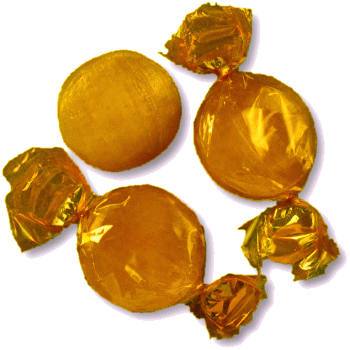
Mmmm, mmmm, good! What is not to like! If you're a fan of caramel's lighter buttery cousin, it's a good day to whip up your own Butterscotch in confectionery and/or dance form with this delicious 32 bar strathspey for 3 couples!
Also known as butter toffee, scotch toffee, or brown sugar toffee, butterscotch as we know it today emerged in England in the early 1800s. The earliest recorded commercial reference dates to 1817, in the town of Doncaster, Yorkshire, where confectioner Samuel Parkinson began selling a sweet he called “butterscotch.” The recipe was simple but indulgent: butter and brown sugar, boiled together until rich and caramelized, then poured out to harden.
At the time, sugar had become more widely available, making boiled sweets affordable to the broader public looking to satisfy a sweet tooth! The suffix "scotch" may have been derived from the verb “to scotch”, meaning to score or cut — referring to how the hot candy was marked into pieces before hardening.
This dance was inspired by a dancers's beautiful golden kilt, which reminded the devisor of butterscotch! The dancer in question names his beautiful dress kilt tartan as Auld Jacobite, but its striking sett with golden colours does put one in mind of this favourite old fashioned treat!
This dance contains a cross-hatching "flype" figure, perhaps for the "scotching" of butterscotch candy! The diagonal flipping of the line of dance, starts with the 1st lady and 1st man leading their respective lines. All end in lines on the same diagonal. Dancers at the ends of the lines will have switched places!
The word "flype", referring to something "turning inside out" or "flipping" comes from the Old Norse influence on Scots - specifically related to verbs meaning to peel, strip, or turn back.
During this candy-filled week, enjoy a bit of butterscotch, in whatever form it takes! 💛 🤎 💛 🕺 💃 🍬 🍬 🍬
Butterscotch Kilt
The history of butterscotch begins in early 19th-century England, specifically in Doncaster, Yorkshire. The earliest recorded reference dates to 1848, when a confectioner named Samuel Parkinson began selling butterscotch candies. His sweets became so popular that he reportedly received royal permission to market them.
The original recipe was simple but rich, typically made from brown sugar, butter, sometimes cream, and occasionally a splash of vinegar. The mixture was boiled to what confectioners call the “hard crack” stage, then poured out and broken into pieces once cooled.
There are two main theories about the origin of the name “butterscotch.” One suggests that “scotch” comes from an older English word meaning to score or cut, referring to the practice of scoring the candy before it fully hardened so it could be snapped into neat pieces. Another theory connects the name to Scotland, possibly referencing Scottish butter or a regional style of sweet-making. Most historians, however, favor the explanation related to cutting or scoring.
Unlike caramel, which traditionally uses white sugar, butterscotch is made with brown sugar. The molasses in brown sugar gives butterscotch its deeper flavor, warm toffee-like notes, and darker color. Butter is an essential ingredient; without it, the confection would not be considered true butterscotch.
Butterscotch is often confused with several other sugar confections, but each differs in ingredients and technique. Caramel begins with white sugar that is heated until it melts and browns through caramelization. Only after the sugar has caramelized are butter or cream added. Its flavor comes from toasted sugar rather than molasses, giving it a slightly bittersweet complexity. Depending on how it is prepared, caramel may be a pourable sauce or a soft, chewy candy.
Fudge is made from sugar, butter, and milk or cream, but it is cooked only to the soft ball stage. After cooking, it is cooled and beaten, which creates tiny sugar crystals that give fudge its smooth yet faintly grainy texture. Fudge is soft and dense rather than brittle and is often flavored with chocolate, vanilla, or other additions.
Toffee is made from white sugar and butter cooked to a higher temperature, typically the hard crack stage. It is cooked longer than caramel and usually contains little or no cream. The result is a hard, brittle candy that snaps cleanly when broken. Toffee is often paired with nuts or coated in chocolate.
Scottish tablet is another related confection. Made from sugar, butter, and condensed milk, sometimes with cream, it is boiled and then beaten similarly to fudge but cooked to a slightly higher temperature. Tablet is firmer and much grainier than fudge, breaking into crumbly pieces that melt in the mouth. It is intensely sweet and deeply buttery, with lightly caramelized milk notes.
Originally a hard candy, butterscotch later evolved into softer forms, including sauces for puddings, ice cream toppings, and butterscotch pudding. It became especially popular in the United States during the late 19th and early 20th centuries, where it was adapted into cakes, pies, and layered desserts. By the 1920s and 1930s, butterscotch pudding was a common feature in American home kitchens.
Though sometimes considered old-fashioned, butterscotch has endured. It remains a favorite in British confectionery shops, American diner desserts, and nostalgic baking traditions. Its lasting appeal lies in its rich balance of buttery sweetness and the subtle depth provided by molasses. Here's a wonderful old recipe.
And for a delicious butterscotch tart, click the butterscotch kilt!
And for a clearer version of the dance description, click here!

Click the dance cribs or description below to link to a printable version of the dance!
