



WELCOME TO AN ENTERTAINMENT SITE FOR SCOTTISH COUNTRY DANCERS!
Enjoy this curated selection of theme-related dances for celebrations and holidays, or find a dance associated with a special calendar day, or EVEN your own birthday!

Mar 12

Hitchcock Day
The MacGuffin
Other Scottish Country Dances for this Day


Today's Musings, History & Folklore
“The MacGuffin is the thing that the spies are after, but the audience doesn’t care.”
~ Alfred Hitchock (1899-1980)
In contrast, this 32 bar jig is full of suspense and importance for the 3 couples in a 4 couple setting - double figure of eights, meanwhiles, and an Inveran reel! Cue the opening music and listen to your director, I mean your teacher! Quiet in and on the set!
Are you a fan of the films of the "Master of Suspense"? Alfred Hitchcock? Well then, today might be a good day to revisit one of his famous films!
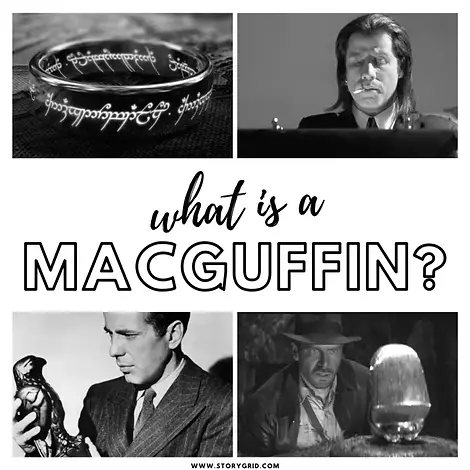
The MacGuffin is a storytelling device closely associated with Alfred Hitchcock. It refers to an object, secret, or goal that drives the plot forward because the characters care about it intensely—even though the audience eventually realizes that the exact details of the object are not very important, the classic "red herring" of misdirection!
Hitchcock liked to explain the term with a joke about two men on a train discussing a mysterious package. One says it is a MacGuffin, a device for trapping lions in the Scottish Highlands. When the other points out that there are no lions in the Highlands, the reply is: “Well then, that’s no MacGuffin!” The point of the story is that the MacGuffin only matters to the characters—it is simply the engine that keeps the story moving.
Hitchcock used this device in many of his most famous films:
* The 39 Steps — stolen British military secrets
* Saboteur — a mysterious sabotage conspiracy targeting U.S. infrastructure
* Notorious — uranium ore hidden in wine bottles by Nazi agents
* Strangers on a Train — the “criss-cross” murder pact
* Rear Window — the suspected murder of a neighbor’s wife
* North by Northwest — microfilm containing government secrets
* Psycho — the stolen $40,000 that starts the story
Master the MacGuffin in dance form, and enjoy the "red herrings" in film on the day designated for celebrating Hitchcock's classic films. 🖤 🧡 🖤 🎥 🍿 🎬 🎞️ 🐟 🍥 🍥 🍥
The MacGuffin
Although Alfred Hitchcock did not have a deep personal or family connection to Scotland, Scotland appears in several interesting ways in his life and films.
Hitchcock was born in London in 1899 to a Catholic family of English and Irish background. Some genealogies suggest distant Scottish roots in earlier generations, but this was not a major part of his identity. He generally identified culturally as English rather than Scottish.
The clearest connection between Hitchcock and Scotland appears in the 1935 film The 39 Steps. In this thriller, the main character Richard Hannay is forced to flee across Scotland while pursued by spies and the police. The story includes dramatic sequences set in the Scottish Highlands, a stop at a crofter’s cottage, and scenes that emphasize the remoteness and ruggedness of the landscape.
The film was based on the novel The Thirty-Nine Steps by Scottish writer John Buchan. Buchan’s adventure stories often used Scottish settings and themes of espionage, conspiracy, and the innocent man on the run—ideas that strongly influenced Hitchcock’s early suspense style. Although the story is set largely in Scotland, many of the scenes were actually filmed in England while attempting to recreate the Highland atmosphere.
Another indirect Scottish connection appears through actors and collaborators. Scottish actor Sean Connery later starred in Hitchcock’s 1964 film Marnie, bringing one of the most recognizable Scottish presences into Hitchcock’s Hollywood period. Scottish actor John Laurie also appeared in The 39 Steps.
More broadly, Hitchcock was drawn to the style of suspense storytelling common in British and Scottish adventure literature. These stories often featured an ordinary person caught up in an international conspiracy, forced to travel through unfamiliar landscapes while trying to clear their name. This narrative pattern became one of Hitchcock’s trademarks and appeared in many of his films.
For more on his plot device "The MacGuffin", the namesake of this dance, click the collage!
Click the dance cribs or description below to link to a printable version of the dance!
