


WELCOME TO AN ENTERTAINMENT SITE FOR SCOTTISH COUNTRY DANCERS!
Enjoy this curated selection of theme-related dances for celebrations and holidays, or find a dance associated with a special calendar day, or EVEN your own birthday!


Feb 3

February's Birthstone
The Amethyst (Charlton)
Other Scottish Country Dances for this Day


Today's Musings, History & Folklore
"At the 24th Australian Winter School in Perth in September/October 1999 I was in the Nullagine Class. Derek Haynes taught his dance “Black Donald” which has the figure Allemande Right and Allemande Left, which is described in the dance “Not I”, R.S.C.D.S. Book 28. I like this figure and other dances, “The Peterhead Lassies” by Roy Goldring and “The Bluebells of Scotland” by Iain Boyd, which contain it. It occurred to me that I did not know of any strathspey containing the figure (although Alastair McFadyen in New Zealand had taught a version of Sandy o'er the Lea with that figure from an old book). This was the inspiration for the dance. To the Allemande figure, I have added other of my favourite strathspey movements - the progression, dancing through the ends and the hands across flowing into right hand turns.
Nullagine is a town in Western Australia which is famous for its amethyst production. We were pleased to learn that amethyst is said to protect from intoxication!
Happy February Birthdays, Dancers, with this birthstone strathspey! The radiant purple amethyst, is steeped in history and romance—fitting for the month of St. Valentine! Legend has it that St. Valentine himself wore a purple amethyst ring, engraved with an image of Cupid, making it easy for Roman soldiers to recognize him and seek his secret marriage services. This was a bold act of defiance against Emperor Claudius II, who had outlawed young couples from marrying, believing that single men made better soldiers. But Valentine, believing in love above all, continued to wed them in secret!
Beyond its connection to love and devotion, amethyst ihas long been associated with healing, mental clarity, and even warding off intoxication! The ancient Greeks and Romans believed that wearing amethyst—or even drinking from goblets carved from it—could prevent drunkenness. Its very name comes from the Greek “amethystos”, meaning "not intoxicated."
So, if you’re celebrating a birthday this month, Cheers and Sláinte! 🥃 💜 💎 🎂 😊
The Amethyst (Charlton)
Amethyst is a violet variety of quartz often used in jewelry. Once worn only by royalty, Amethyst is the traditional birthstone for February.
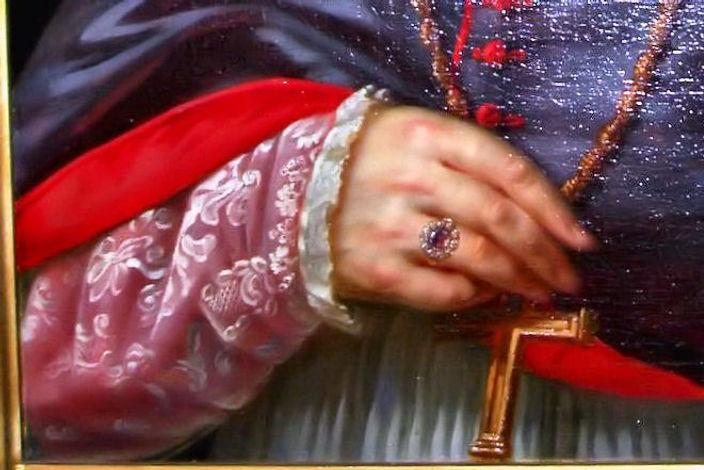
St. Valentine is said to have worn a purple amethyst ring which was usually worn by Christian bishops (as it thought to help enable restraint) with an image of cupid engraved on it. Roman soldiers would see the ring and ask him to marry them. It may have been this association which led to the stone being chosen as the birthstone for the month of February and invested amethyst with special powers to attract love.
In his poem "L'Amethyste, ou les Amours de Bacchus et d'Amethyste" (Amethyst or the loves of Bacchus and Amethyste), the French poet Remy Belleau (1528–1577) invented a myth about the creation of amethyst. In the story, Bacchus, the god of intoxication, of wine, and grapes was pursuing a maiden named Amethyste, who refused his affections.
Amethyste prayed to the gods to remain chaste, a prayer which the goddess Diana answered, transforming her into a white stone. Humbled by Amethyste's steadfast desire to remain chaste, Bacchus poured wine over the stone as an offering, dyeing the crystals purple.
For more about St. Valentine and his amethyst ring, click the painting below.
Click the dance cribs or description below to link to a printable version of the dance!
