


WELCOME TO AN ENTERTAINMENT SITE FOR SCOTTISH COUNTRY DANCERS!
Enjoy this curated selection of theme-related dances for celebrations and holidays, or find a dance associated with a special calendar day, or EVEN your own birthday!

Yorkshire Dales
Aug 1

Yorkshire Day
70 Yorkshire Festivals
Other Scottish Country Dances for this Day


Today's Musings, History & Folklore
"Ey up! Happy Yorkshire Day!"
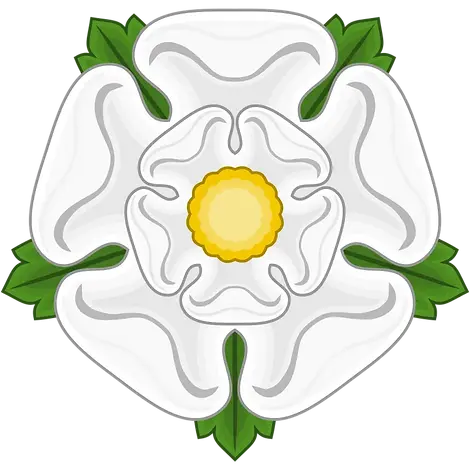
Celebrated each year on 1 August, Yorkshire Day was established in 1975 by the Yorkshire Ridings Society to celebrate the history, culture, and identity of England's largest historic county. The date commemorates the anniversary of the Battle of Minden (1759), when Yorkshire soldiers famously wore white roses in their caps, and today communities across the county celebrate with civic ceremonies, parades, brass bands, traditional dancing, markets, and festivals. The White Rose of York remains the county's enduring symbol, alongside landmarks such as York Minster, the ruins of Fountains Abbey, the rolling Yorkshire Dales, the wild North York Moors, and the county's iconic dry-stone walls.
This lively 32-bar jig for three couples in a four-couple set, devised by Catherine Livsey, celebrates the 70th anniversary of the White Rose Festival!
Yorkshire is renowned for its hearty cuisine, including Yorkshire puddings, Wensleydale cheese, Yorkshire tea, Parkin ginger cake, pies, and fine local ales. Animal lovers know it as the setting for James Herriot's beloved All Creatures Great and Small, while literature enthusiasts cherish it as the home of the Brontë sisters. Growing up in the village of Haworth, Charlotte, Emily, and Anne found inspiration in the dramatic Yorkshire moors, landscapes that became unforgettable settings in Jane Eyre, Wuthering Heights, and The Tenant of Wildfell Hall.
May all your dancing partners be agreeable! 🕺 💃 💙 💚 🤍 💛 🫖 🧀 🥧 🐑 🐑 🐑 📚
70 Yorkshire Festivals
Yorkshire is England's largest historic county, a land of sweeping moors, rolling dales, dramatic cliffs, bustling market towns, and centuries of remarkable history. Its story stretches back thousands of years, from the prehistoric peoples who raised standing stones and burial mounds across the hills, to the Celtic Brigantes, whose tribal kingdom once covered much of northern England. When the Romans arrived in AD 71, they established the city of Eboracum—modern-day York—which became one of the most important cities in Roman Britain. Several Roman emperors lived there, and both Septimius Severus and Constantius Chlorus died within its walls. It was even in York that Constantine the Great was proclaimed emperor in AD 306, setting him on the path to transforming the Roman Empire.
After the Romans departed, Yorkshire became part of the Anglo-Saxon kingdom of Northumbria before experiencing a dramatic new chapter with the arrival of the Vikings. In AD 866, Norse settlers captured York, renaming it Jórvík, one of the greatest Viking cities outside Scandinavia. The city flourished as a thriving center of trade, craftsmanship, and culture, linked by waterways to much of Europe. Archaeological discoveries from Viking York have revealed beautifully carved woodwork, jewelry, textiles, leather shoes, gaming pieces, and everyday household items, offering one of the richest pictures of Viking life ever uncovered.
The Norman Conquest of 1066 brought turbulent times. Yorkshire fiercely resisted William the Conqueror, prompting his devastating "Harrying of the North" in 1069–1070, during which villages, crops, and livestock were destroyed in an effort to crush rebellion. Although this tragedy left much of the region impoverished for years, Yorkshire gradually recovered, becoming dotted with magnificent abbeys, castles, and market towns. Today, the romantic ruins of places like Fountains Abbey, Rievaulx Abbey, and Whitby Abbey stand as reminders of the county's medieval wealth and influence.
During the Middle Ages, Yorkshire prospered through its thriving wool trade. The county's hardy sheep produced excellent fleece that supplied England's booming textile industry, and towns such as Leeds, Halifax, and Bradford grew into internationally important centers for spinning, weaving, and cloth finishing. By the Industrial Revolution, Yorkshire had become one of the engines of Britain's economy, producing textiles, steel, coal, locomotives, and engineering innovations that were exported around the world. Many of the sturdy stone mills, canals, and railway viaducts built during this era still shape the landscape today.
Yorkshire has also inspired generations of artists, writers, and storytellers. The windswept moors gave unforgettable settings to the novels of the Brontë sisters, while James Herriot's beloved veterinary stories introduced millions to the gentle beauty of the Yorkshire Dales and its farming communities. From Robin Hood's legendary adventures in Sherwood's neighboring forests to Dracula's eerie arrival at Whitby, Yorkshire's landscapes have long captured the imagination.
Today, Yorkshire proudly celebrates its unique identity every 1st of August on Yorkshire Day, a tradition begun in 1975 to honor the county's history, heritage, and enduring spirit. With its famous white rose emblem, hearty Yorkshire puddings, Wensleydale cheese, world-renowned teas, picturesque villages, rugged national parks, and warm local pride,
Click the White Rose of York for more on this year's special events!
Click the dance cribs or description below to link to a printable version of the dance!
